Visualizing the cosmos.
Two collaborations with conceptual artist Ashley Zelinskie, grounded in her long-standing coordination with NASA's James Webb Space Telescope team — including a virtual environment commissioned by the Whitney Museum of American Art.
A museum landscape curved by gravity
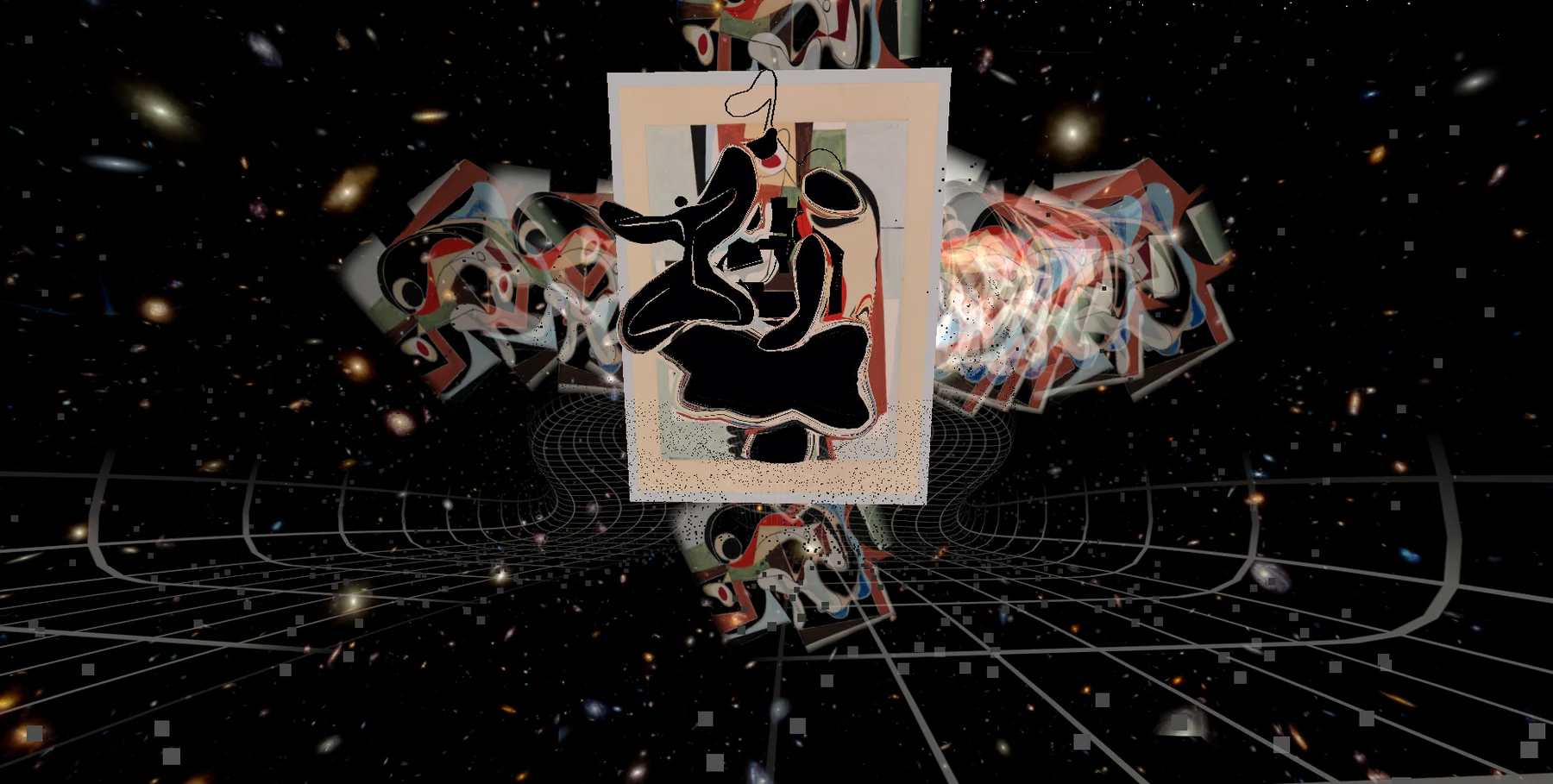
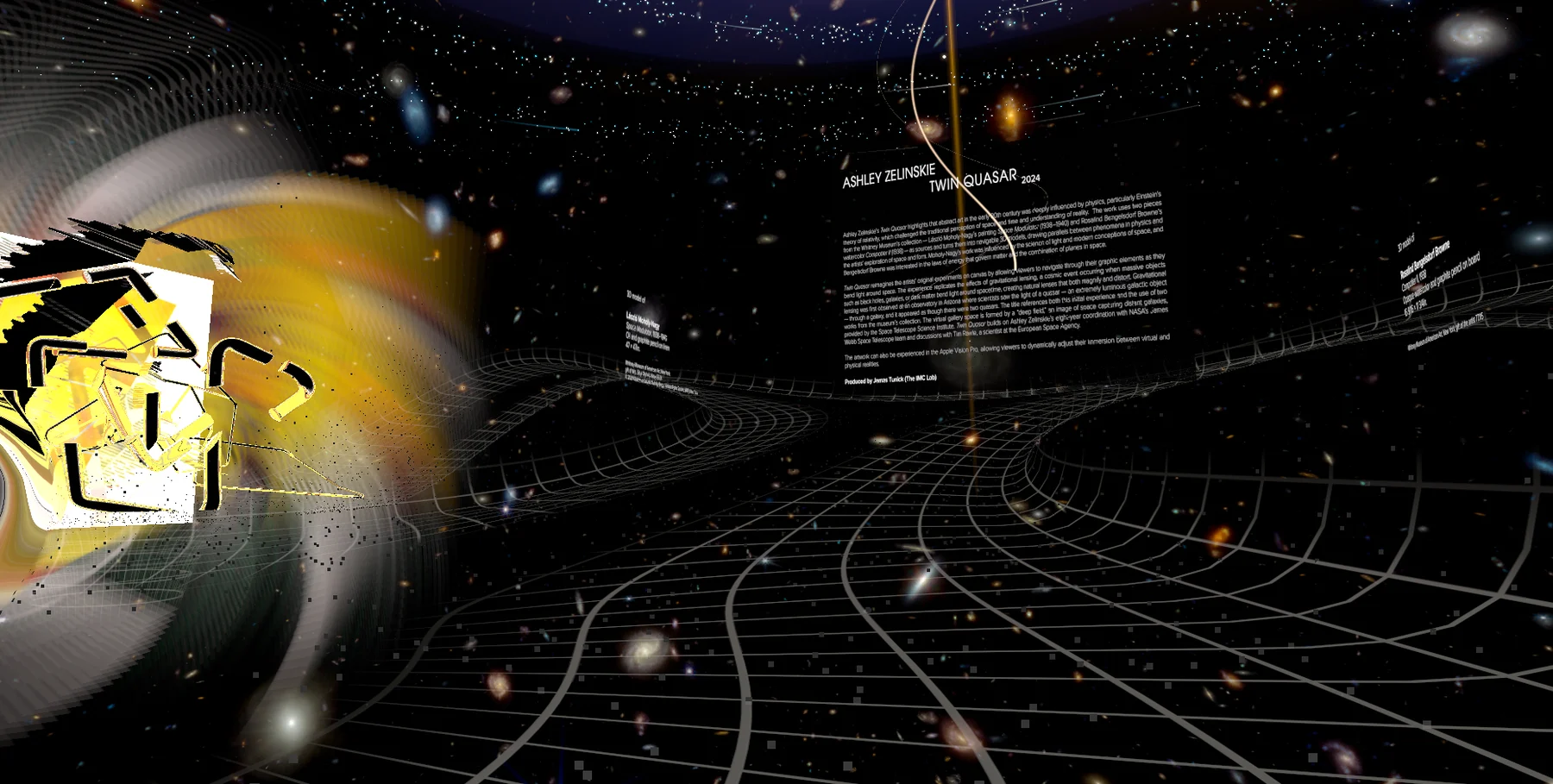
Twin Quasar is a virtual environment commissioned by the Whitney Museum of American Art for the Whitney Museum Virtual Landscape on MONA. It turns two paintings from the Whitney’s collection — Moholy-Nagy’s Space Modulator and Bengelsdorf Browne’s Compotier II — into navigable 3D models, drawing parallels between abstract painting and the physics of gravitational lensing.
We designed the spatial routing as a hyperbolic surface representing a gravitational field: each point of interest shapes the field as if it were a source of gravity, and visitors are guided from artwork to artwork through space curved by the works themselves, while a point cloud populates the field as distant celestial bodies. The result is a navigation system that reads as part of the artwork.
Art from telescope data
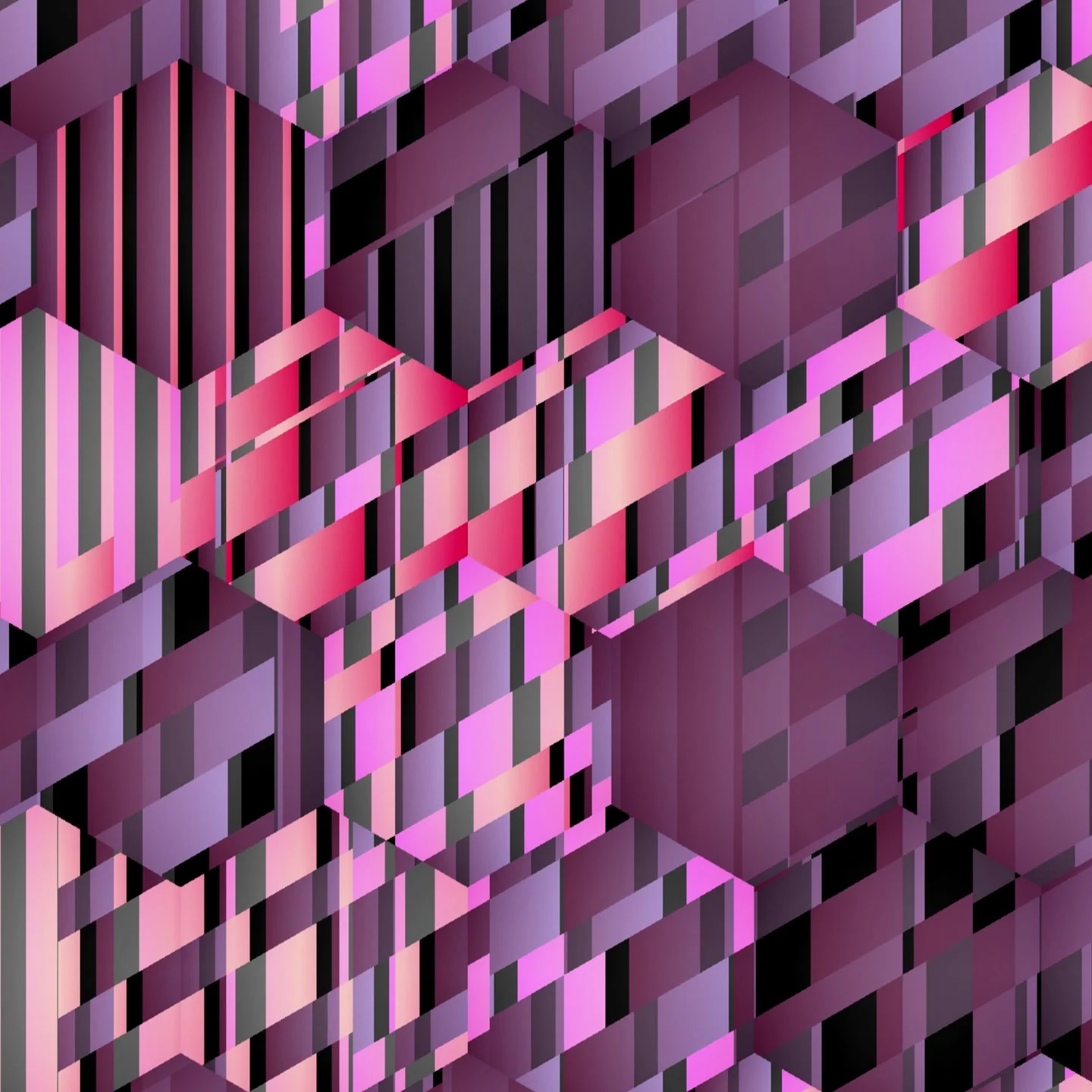
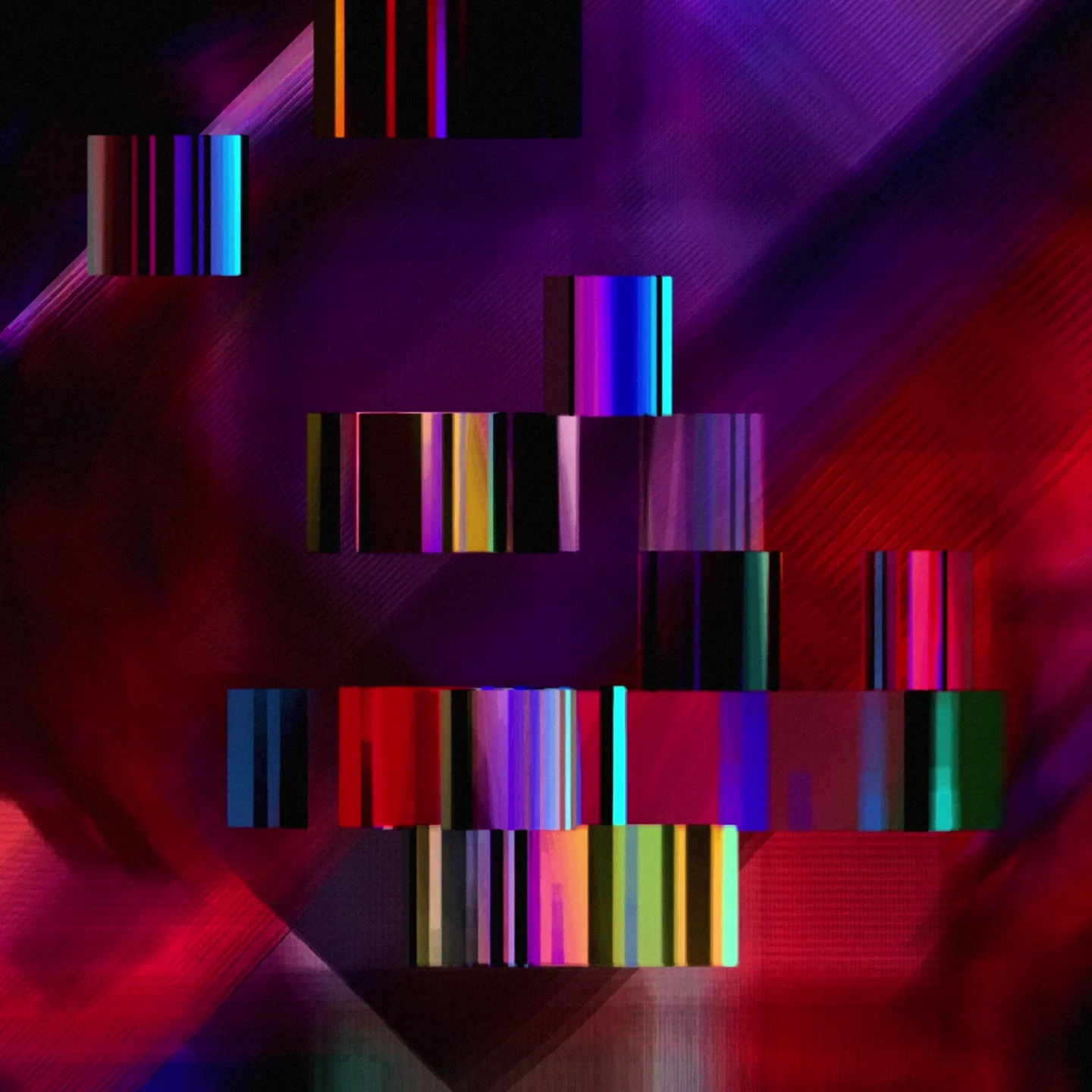
Wanderer is a generative collection shaped by JWST measurements of exoplanets — distance, atmospheric composition and light conditions feed directly into each work’s geometry, colour and composition. Working for Ashley in the project’s early phases, we prototyped the system and researched data-visualisation approaches that let the telescope data drive the generative output; the final artworks were realised with Jeres.
The challenge: a visual language that honoured the scientific source without collapsing into illustration or infographic — something that works as art on its own terms.